Michael D. Mitzenmacher
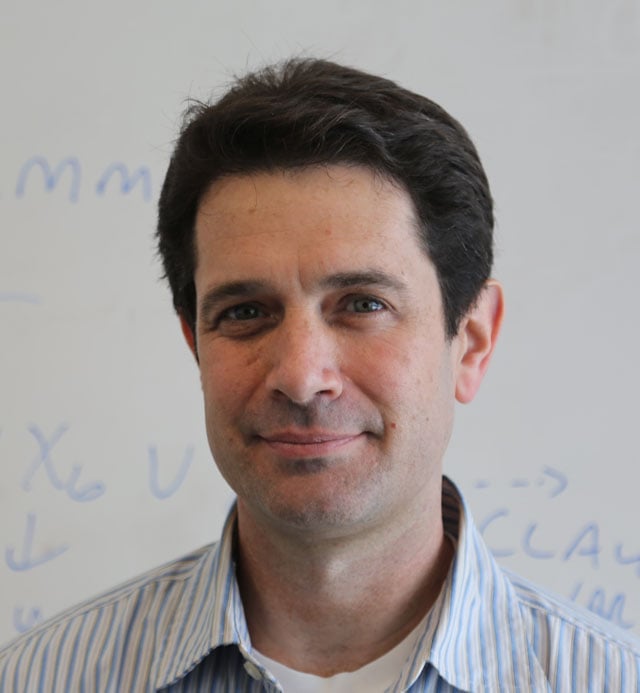
For more information on working with this expert, please contact:
Education
Ph.D., computer science, University of California, Berkeley; C.A.S., mathematics, University of Cambridge
Summary of Experience
Professor Mitzenmacher’s research interests include the design and analysis of algorithms and data structures, networks and data transmission, artificial intelligence, large language model systems, computer security, and information theory. He has consulted to technology companies and research laboratories, including Adverplex (Cogo Labs), Akamai, AT&T, Digital Fountain, eharmony, Fluent Mobile (Fiksu), Google, Huawei, ITA Software, JobSync, Microsoft, Mitsubishi Electric Research Laboratories, and Yahoo!. Professor Mitzenmacher has served as an expert witness in litigation involving software and intellectual property issues and has provided testimony in multiple trials. He has authored or coauthored more than 250 conference and journal publications on topics such as algorithms that incorporate machine learning predictions, efficient hash-based data structures, erasure and error-correcting codes, power laws, scheduling for large language model systems, and data compression. He is also the coauthor of Probability and Computing, a textbook on randomized algorithms and probabilistic techniques in computer science. Professor Mitzenmacher’s research on privacy-preserving keyword searches on remote encrypted data won the 2025 Applied Cryptography and Network Security Conference Test of Time Award. His work on low-density parity-check codes shared the 2002 IEEE Information Theory Society Best Paper Award and won the 2009 ACM SIGCOMM Test of Time Award. Prior to joining the Harvard faculty, Professor Mitzenmacher was a research scientist at Digital Equipment Corporation’s Systems Research Center, where he worked on topics such as web-based information retrieval, erasure and error-correcting codes, online algorithms, and load balancing.
Provided Expert Testimony
Additional Cases