
-
Digital Asset Valuation: Lessons from FTX
What can we learn about digital asset valuation from the collapse of the once-dominant cryptocurrency exchange?
In one of the highest-profile digital asset litigations to date, the cryptocurrency exchange FTX filed for bankruptcy after a liquidity crisis caused the exchange to cease operations. The basis for customer claims against FTX in the bankruptcy proceedings comprised over 1,200 different digital assets, including cryptocurrency, digital tokens, and derivatives such as futures, leveraged tokens, and tokenized stock. The bankruptcy, which involved the liquidation of FTX's holdings, illustrates the unique challenges of valuing a wide range of digital assets against the backdrop of significant liquidity and asset marketability constraints.
In this feature, we describe some of the considerations that informed the digital asset valuation in FTX and provide explanations of key concepts.
Valuation of Illiquid Assets
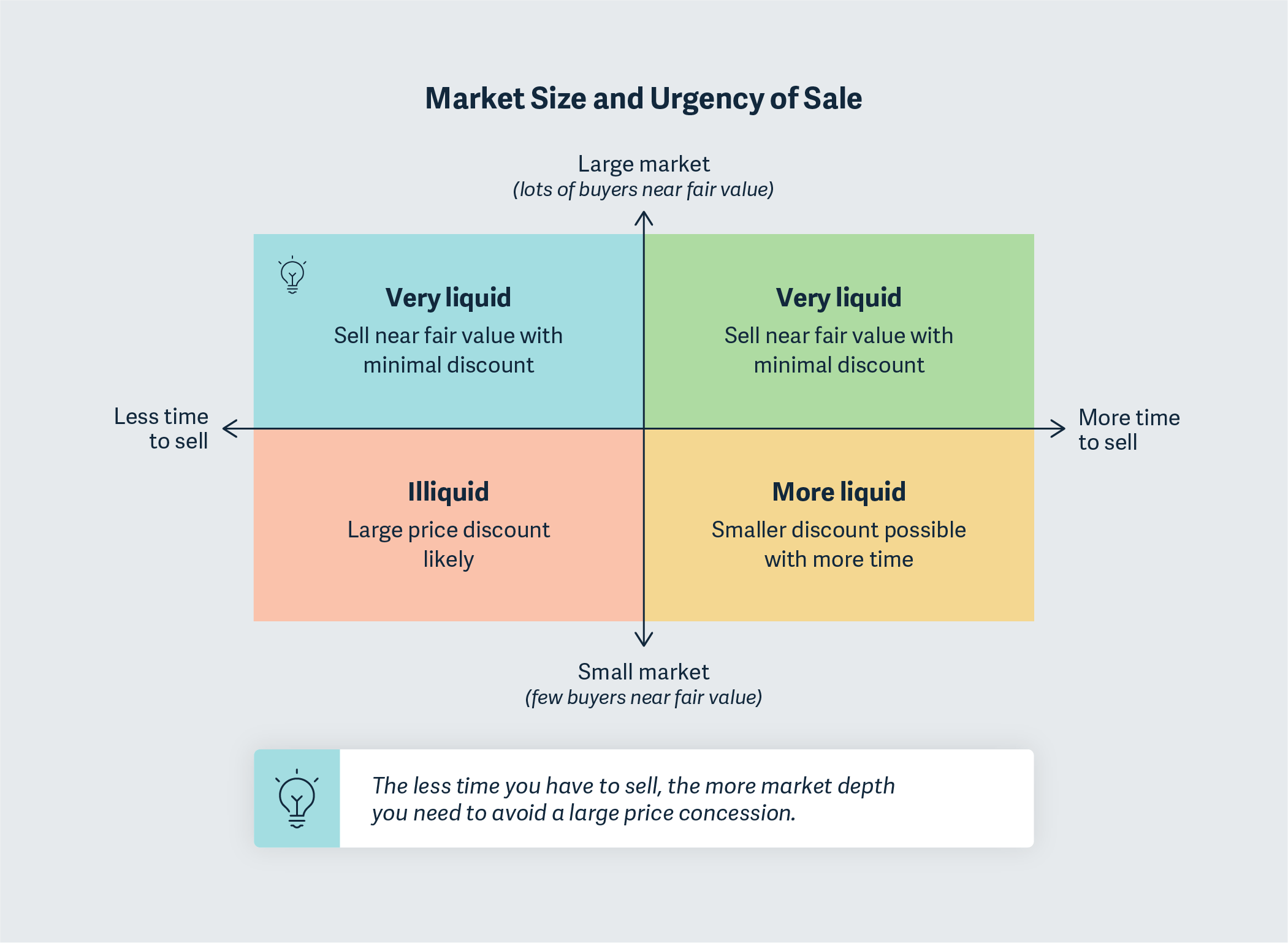
The FTX case was unique in that the asset valuations had to account for the effect of the complete liquidation of FTX's holdings. Given the magnitude of FTX's holdings, even an orderly liquidation was expected to have substantial valuation implications for assets with few buyers and/or low daily trading volume. For these illiquid digital assets, complete liquidation of FTX's holdings would likely have impacted the market price, and therefore valuation required the calculation of "asset liquidation discounts," or the discounts at which FTX would have been able to sell their holdings in an orderly liquidation that started at the time of the bankruptcy filing.
What is an asset liquidation discount?
Investors who need to redeem shares of an illiquid asset immediately may have to accept a lower price than the most recent price for a single orderly transaction. The asset liquidation discount reflects this hypothetical lower price.
What about the size of the position to liquidate?
An asset liquidation discount is based on both the nature of the market for the asset and the size of the position to be liquidated. Liquidating a large position of an asset relative to that asset's average daily trading volume will generally entail a larger discount, both because it's harder to find counterparties willing to purchase the entire position at the prevailing market price, and also because, as soon as the market realizes there is a large position that is being liquidated, buyers may strategically purchase the position at lower prices.
The magnitude of an asset liquidation discount will vary across classes of digital assets. In the FTX matter, there were several digital tokens for which the underlying markets could not realistically absorb FTX’s positions, given the size of the positions relative to the tokens’ daily trading volume. In one example, liquidation of the token by FTX, assuming an orderly sale of 5% of the daily trading volume per day, would take more than 1,000 years. In that case, the valuation discount reflected the fact that, even following a slow liquidation strategy, the liquidated value of the token was very small relative to the original holding.
Non-Marketable Assets
What are non-marketable digital assets?
Non-marketable digital assets are those that are subject to a vesting or lock-up period, during which customers cannot sell the asset, similar to employee stock options that are subject to a vesting period. Because of their sale restrictions, a locked version of an asset is less valuable than the same asset without sale restrictions.
In the FTX bankruptcy, the face value of customer claims associated with non-marketable assets was approximately $1 billion. When valuing these customer claims, it was necessary to apply a valuation discount for lack of marketability (DLOM). DLOM accounts for the opportunity cost and additional risk associated with holding a locked asset: A holder can’t take advantage of price upswings and has increased exposure to price crashes.
For non-marketable digital assets, the size of a discount for lack of marketability increases with the length of the vesting period and the volatility of the underlying asset's value. The high volatility of crypto assets and the long lock-up periods meant that discounts for lack of marketability associated with at-issue assets in the FTX bankruptcy were substantial.
Example: A locked token
An advisor on a crypto project helped the founders design a token launch and, in exchange, received an allocation of tokens that conferred voting rights for the project. The tokens are locked so that the advisor cannot sell them before the project is completed. The tokens unlock over the course of a year, with 25% unlocking each quarter.
Discounts for lack of marketability tend to be model-dependent, particularly at longer time horizons. For example, two of the commonly used DLOM models, Chaffe and Finnerty, perform poorly at long time horizons, generating results that are artificially constrained or that run contrary to economic theory. The DLOMs produced by the Finnerty model arbitrarily cannot go above a discount of approximately 32 percent, no matter the length of the non-marketability period or the characteristics of the asset at hand. Perhaps even more problematically, at long time horizons, the Chaffe model improperly implies that DLOMs decrease as the length of the non-marketability period increases. To improve estimation accuracy, DLOMs in the FTX bankruptcy relied on Monte Carlo simulations based on the modeling setup of Finnerty (2012), allowing for the direct estimation of the discount and avoiding the constraints imposed by the closed form solution.
Crypto Derivatives
Some of the creditor claims in the FTX bankruptcy were for crypto derivatives. Unlike tokens traded across a wide range of venues, crypto derivatives are specific to the exchange they are traded on. As a result, the appropriate valuation methodology for the FTX crypto derivatives depended on the specifics of the FTX exchange, including its method for clearing trades and the nature of the contracts. Among the most actively traded digital assets on the FTX exchange were perpetual futures.
What are futures?
Futures allow investors to place bets about the future price of an underlying asset without actually owning that asset. For example, in a Bitcoin futures contract, one investor takes a long position that Bitcoin’s value will rise, and the other investor takes a short position, betting that Bitcoin’s price will decrease.
How did FTX perpetual futures work?
In a futures contract, both investors deposit collateral into a margin account – a brokerage account maintained by the crypto exchange – to protect the exchange from investor defaults.
Perpetual futures, which are the most common crypto-futures derivative and were one of the most actively traded digital assets on the FTX exchange, do not have a set maturity date, so payment is exchanged between the margin accounts of the opposing parties in the contract on a continuous basis based on which investor's bet is paying off. Each day, the FTX exchange used real-time market prices for the underlying asset to update each customer's P&L: For example, if the price of Bitcoin rose, the exchange would transfer funds from the short investor's margin account to the long investor's margin account.
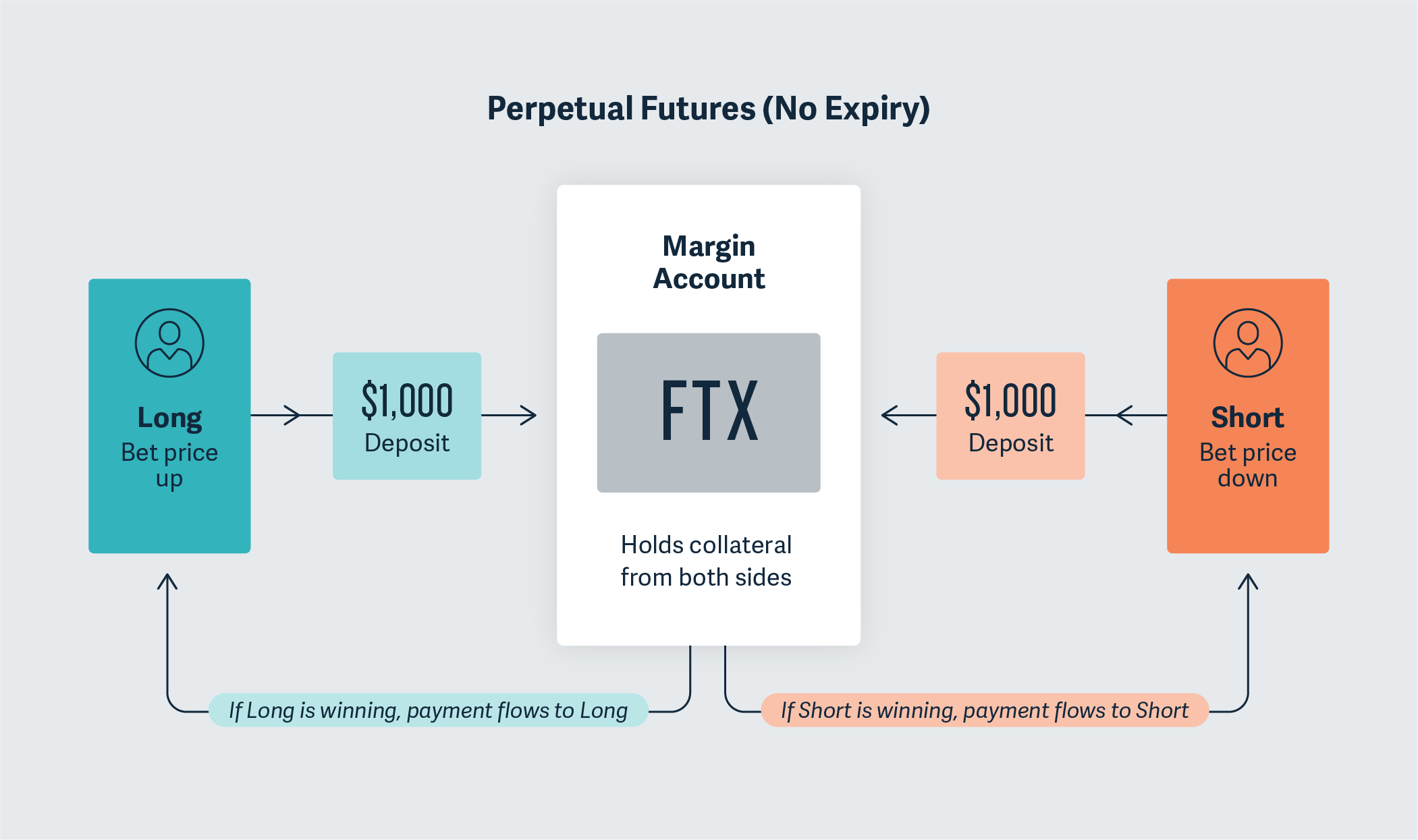
An asset liquidation discount was not applied to FTX perpetual crypto futures. Because of the high frequency with which the exchange updated customers’ margin account P&Ls, it was reasonable to expect that customer P&Ls closely reflected futures prices at any snapshot in time. Accordingly, the value of customer claims associated with crypto perpetual futures was the value of their margin account at the time of the bankruptcy filing.
Takeaways
The FTX bankruptcy case illustrates that valuation requires a thorough understanding of the characteristics of the assets and the markets they trade in. In the FTX matter, those characteristics included liquidity and lack of marketability issues, along with the specifics of the settlement process for the derivative instruments. ■
-

AG Feature
This feature was published in September 2026.