
-
Corporate Control, Executive Incentives, and Board Oversight: A Q&A with David Larcker
Corporate governance best practices provide a critical framework for sound decision making, but their application depends on the company, the decision at issue, and the surrounding circumstances.
Some of the most contested governance questions today involve decisions where established best practices do not provide a one-size-fits-all answer. For example, controlled companies, large CEO compensation awards, and AI oversight each raise distinct questions about incentives and risk. In each case, sound governance calls for careful analysis of the company’s structure, objectives, and competitive environment, as well as the board’s decision-making process.
Analysis Group Vice President Anne Catherine Faye explored these issues with academic affiliate David Larcker, the James Irvin Miller Professor of Accounting, Emeritus, at the Stanford Graduate School of Business. Professor Larcker is co-director of Stanford’s Corporate Governance Research Initiative and a Distinguished Visiting Fellow at the Hoover Institution. Their conversation covered conflicts arising from concentrated control, the design and justification of large CEO compensation awards, Professor Larcker’s approach to evaluating board decisions as an expert witness, and emerging board oversight challenges.
IPO activity over the last year has renewed attention to controlled-company and dual-class structures. SpaceX, which completed the largest IPO in history, comes to mind. Can you explain how these corporate structures work and what they can mean for governance?

David F. Larcker: James Irvin Miller Professor of Accounting, Emeritus, Co-Director of the Corporate Governance Research Initiative, Stanford Graduate School of Business, and Distinguished Visiting Fellow at the Hoover Institution
Controlled companies are those in which an individual or small group of shareholders holds sufficient voting power to control the company, often through a majority of the voting power or a dual-class stock structure that gives certain shares enhanced voting rights. In a dual-class stock structure, the controlling party may therefore hold substantially more voting power than economic ownership. This divergence between voting rights and economic rights – that is, the party’s claim to financial returns – is commonly referred to as the “ownership wedge.” The size of the wedge is a frequent focus of governance analysis.
From a governance perspective, a controlled corporate structure is not inherently good or bad. Like other ownership structures, it can create or erode shareholder value depending on the circumstances. One potential benefit is stability. The controlling party can insulate the company from short-term market pressures and opportunistic takeover attempts, potentially giving management greater latitude to pursue long-term strategies.
That said, concentrated control can create governance risk, particularly when the ownership wedge is significant. With a wider gap, the controlling party may have greater ability to pursue private benefits that are not shared proportionately with other shareholders. Those benefits can range from perks like using the corporate jet to other decisions that disproportionately benefit the controlling party.
Can the divergence between voting rights and economic rights, or the “ownership wedge,” create conflicts of interest?
Possibly. Because of its voting power, the controlling party may be able to influence strategic decisions, board composition, and compensation. Classic examples of conflicts include self-dealing or related-party transactions, deals in which the controlling party has an interest on both sides of a transaction or receives a benefit that is not shared proportionately with other shareholders. Another important consideration in controlled companies is board independence – that is, whether directors are qualified and sufficiently independent from the controlling party to evaluate transactions or other decisions objectively. This becomes particularly important when the controlling party has a personal or financial interest in the transaction or decision.
Executive compensation can raise similar concerns, particularly when the CEO is also the controlling party. In those circumstances, governance processes matter because the executive may be able to influence both the composition of the board and the level and structure of their own compensation.
Broadly, the central governance question is how the company manages situations in which the controlling party’s interests may diverge from those of the company or its minority shareholders.
“...[T]he central governance question is how the company manages situations in which the controlling party’s interests may diverge from those of the company or its minority shareholders.”– David F. Larcker
So, do large CEO compensation awards raise concerns simply because of their size?
Not necessarily. A very large compensation award is not, by itself, evidence of a conflict of interest. I have studied executive compensation for many years, and so-called “mega grants” are particularly interesting because the governance assessment is rarely straightforward. A large, performance-based award can create powerful incentives, but it can also raise questions about whether the potential payout is proportionate to the value created.
My colleagues at Stanford and I recently studied 40 such awards, each with an expected value of more than $100 million, granted to 28 CEOs. We examined both what the CEOs ultimately earned and how their companies performed relative to market benchmarks. We found that large CEO awards did not reliably lead to substantial positive stock-price performance. The outcomes were also highly skewed: A relatively small number of CEOs received very large payouts, while many others received substantially less than the expected value of their awards at issuance – in some cases, there was no payout at all.
That is why we should be cautious about judging these awards simply by their size. Instead, there are more informative governance questions, such as whether the performance targets are meaningful, whether the award was appropriately designed for the company’s circumstances, how challenging the performance conditions were, what alternatives the board considered, and whether the approval process was sufficiently independent of the CEO.

Anne Catherine Faye: Vice President, Analysis Group
How should a board think about whether a large CEO compensation award is justified, especially when the potential payout is substantial but contingent on ambitious performance targets?
The starting point is to understand the board’s rationale for the award. This matters because a large compensation award can create risks even if the CEO ultimately receives little or none of the award. An unusually large award can expose the company to heightened scrutiny from shareholders, proxy advisors, and the media. It can also reduce the board’s flexibility to adjust compensation as the company’s circumstances or strategies change.
When I evaluate a board’s decision, I look at the company’s objectives, its competitive environment, and the type of performance the award was intended to encourage. A very large incentive tied to an ambitious target may make more sense in a business where significant investment and risk taking are necessary to create substantial value than in a mature business where value is more likely to be created incrementally.
So, I would not evaluate a large compensation award simply by asking whether the CEO ultimately earned it. From a governance perspective, what matters most is whether the board had a well-reasoned basis for concluding that the award’s potential benefits to shareholders justified its costs and risks.
“A large, performance-based award can create powerful incentives, but it can also raise questions about whether the potential payout is proportionate to the value created.”– David F. Larcker
More generally, what is your approach to evaluating board or leadership decisions in your role as an expert witness?
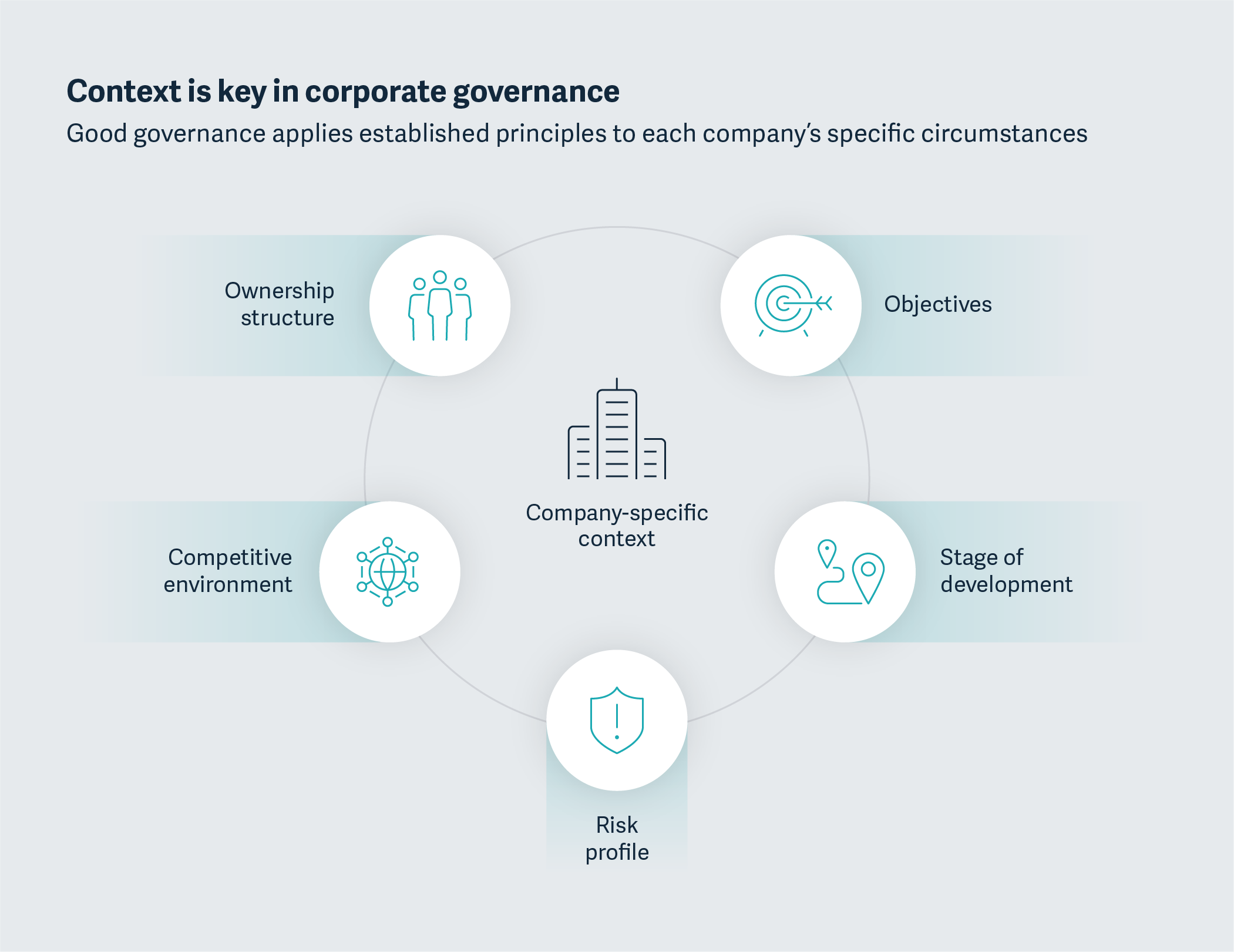
I look at several factors, but context is always important. Companies differ in their ownership structures, objectives, stage of development, competitive environments, and risk profiles, and those differences matter. Good corporate governance requires applying established principles to those specific circumstances.
In my work as an expert, I evaluate a decision in the context in which it was made. I consider the company’s objectives and economic circumstances, as well as the information available to the board at the time and the alternatives it considered. I also look at the incentives and potential conflicts of the decision makers, the use of independent directors or outside advisors where appropriate, and the process through which the decision was reached. Furthermore, I consider the implications for shareholders and the company’s broader risk profile.
I don’t evaluate governance decisions simply by asking whether they ultimately succeeded or failed. Instead, I consider whether, given the information and circumstances at the time, the board followed a sound governance process and had a reasonable basis for the decision it made.
Looking ahead, what do you see as the important emerging issues in corporate governance?
One issue I expect to become increasingly important is how boards oversee rapidly evolving risks that do not fit neatly within traditional governance frameworks. AI is a good example. Boards are being asked to understand how AI affects strategy, operations, risk, labor decisions, and even the information they rely on to make high-stakes decisions.
The challenge is not that directors need to become technical experts. Rather, boards need to determine whether they are receiving the right information, whether management has appropriate controls in place, and whether responsibility for oversight is clearly allocated. Increasingly, the critical issue will be whether the board’s processes, expertise, and information flows are keeping pace with the risks and decisions it’s being asked to oversee. ■

Forum 2026
From Forum 2026.