
-
Preparing for Medicare Drug Price Negotiation with Real-World Evidence
As the US government takes an active role in negotiating drug pricing, early preparation for context-specific review has become critical for manufacturers.
The US Congress enacted the Medicare Drug Price Negotiation Program (MDPNP) of the Inflation Reduction Act (IRA) in response to concerns about the rising cost of drugs.
Since its launch, the MDPNP has started a structural shift in the US drug pricing landscape. With negotiated prices for the MDPNP’s initial set of 10 drugs taking effect in 2026 (Initial Price Applicability Year [IPAY] 2026), additional drugs will be selected across subsequent, ongoing rounds.
Additionally, implementation of IPAY 2028, with negotiations currently occurring in 2026, is marked by an expansion of the category of drugs that the MDPNP selects, as the program will include Medicare Part B drugs in addition to the existing Part D drugs, for the first time that year.
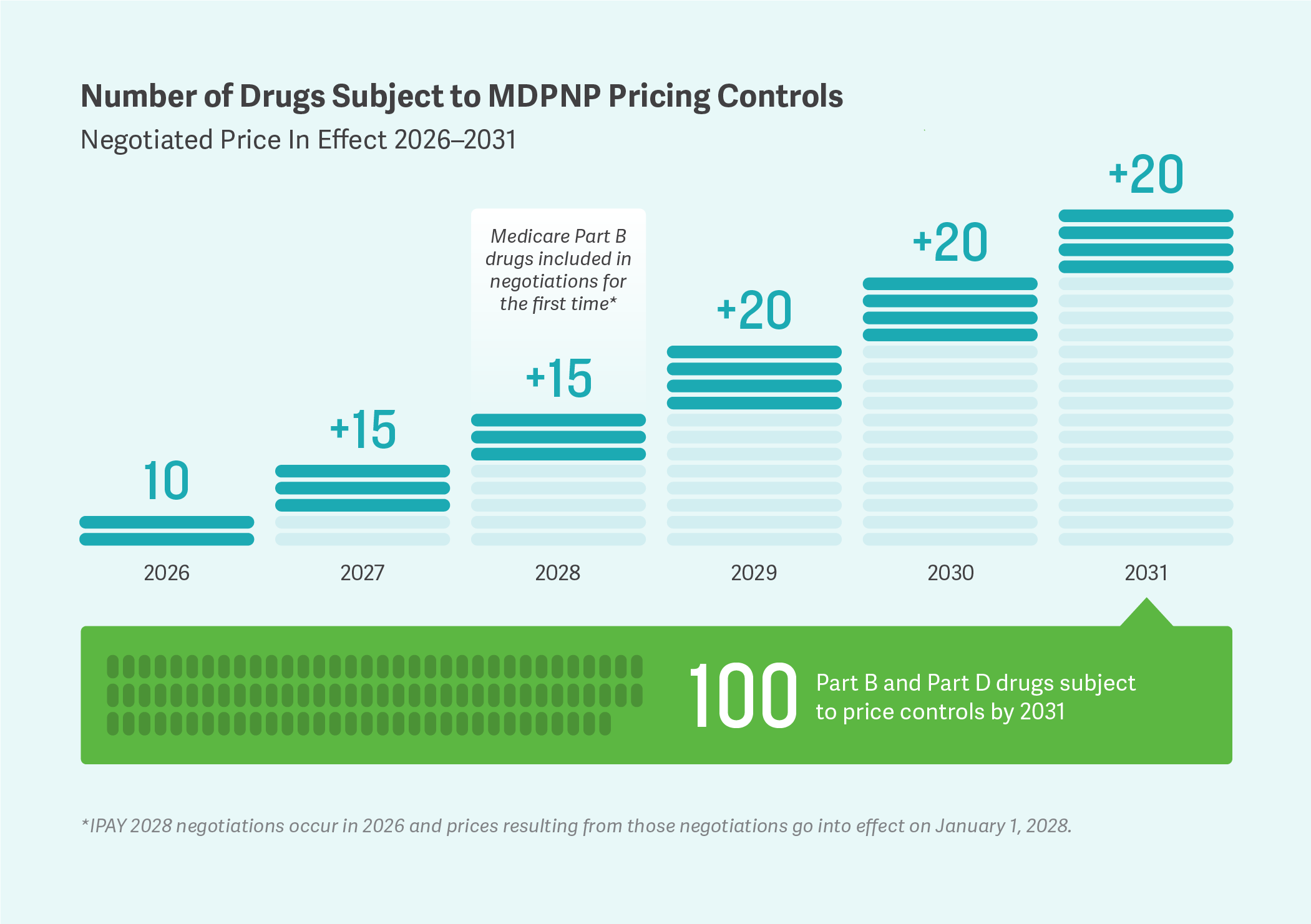
On an ongoing basis, additional drugs will be selected for future rounds of negotiation, with a targeted 100 Part B and D drugs subject to negotiation by 2031. Following the selection of their medications by the Centers for Medicare and Medicaid Services (CMS), drug manufacturers must engage directly with CMS in response to formal requests for treatment, utilization, and revenue data.
In this context, real-world evidence (RWE) can serve as a critical input, helping to characterize the comparative effectiveness of a selected drug, in concert with data available from clinical trials, as well as the unmet need addressed by a selected drug. However, the effective use of RWE in this setting is often nuanced, requiring careful consideration of study design, data sources, and alignment with CMS’s evaluation criteria. For manufacturers, understanding CMS’s MDPNP drug selection process is essential, and early preparation for selection and negotiation – including when and how to leverage RWE during that process – can be critical.
What is CMS’s drug selection and negotiation process?
CMS’s drug selection criteria include total Medicare spend (the program is intended to include drugs associated with the highest Medicare spend), whether an approved generic or biosimilar exists in competition with the drug, and the time that has passed since its approval.
Once selected, drug developers submit evidence through Information Collection Request (ICR) forms, including data on their drug’s clinical benefits and comparative effectiveness. Other considerations may include patient access, drug utilization, and market factors.
CMS then determines a statutory ceiling “Maximum Fair Price” (MFP) based on its own assessment and evidence submitted by drug developers. CMS and manufacturers then engage in a negotiation process, during which manufacturers may respond to the initial offer with counterproposals supported by additional evidence. Manufacturers seek to support an MFP as close as possible to the statutory ceiling by demonstrating the value of their drug, relative to therapeutic alternatives, through clinical and economic evidence and RWE. Preparing responses to questions on ICR forms or for negotiation with CMS could require access to robust data that may not be readily available via clinical trials alone. The process ultimately results in CMS setting a final MFP for the selected drug.
What types of evidence may be most effective in supporting an ICR response?
Effective ICR responses communicate clear key messages with data-driven evidence about the value of a drug, especially as compared to available therapeutic alternatives. CMS evaluates a drug’s MFP through multiple elements of value, such as a drug’s comparative effectiveness versus therapeutic alternatives, support of unmet needs or reduction in disease burden, patient experience data, utilization and spending data, and other RWE relevant to Medicare beneficiaries.
RWE can play an important role in complementing clinical data, particularly when demonstrating treatment effectiveness or utilization in Medicare-relevant populations. When appropriately designed and targeted to CMS’s evaluation criteria, RWE can strengthen key value messages and support more effective ICR responses.
How can manufacturers effectively develop the evidence that they need to prepare for possible MDPNP drug selection?
Timeliness is important in any response: RWE on any factor must be generated early enough to shape the development of key messages around the value of a drug. Manufacturers should take care to begin gathering evidence early and plan to integrate RWE alongside clinical trial data to better position the value of their drug in Medicare-relevant settings.
Doing this means ensuring that RWE is fit for purpose, with study designs and analytic approaches tailored to support clear and credible messaging. Engaging with a partner familiar with the time and care that it takes to generate such evidence can help support both the development of ICR responses and post-ICR submission activities, including negotiation.
Taiji Wang, Manager
Dominic Pilon, Vice President
Masha Zhdanava, Vice President
Dave Nellesen, Principal
Patrick Lefebvre, Managing Principal
Keith A. Betts, Managing Principal

AG Feature
This feature was published in June 2026.